Becoming a photography assistant is one of the best ways to break into the photography industry. If you’ve ever dreamed of working behind the scenes on professional photo shoots, learning from experienced photographers, and developing hands-on skills, this role is your stepping stone.
A photographer assistant plays a crucial role in ensuring that every shoot runs smoothly from preparing equipment to managing lighting, organizing props, and supporting the creative process.
Whether your goal is to become a professional photographer yourself or gain experience in the photography industry, understanding the path to becoming a photography assistant is essential.
In this guide, we’ll cover everything you need to know: what a photography assistant does, the skills required, how to get started, where to find jobs, tips for career growth, and salary expectations. By the end, you’ll have a clear roadmap to start your photography assistant career.
What Is a Photography Assistant?
A photography assistant is someone who supports a professional photographer before, during, and after a photo shoot. The role is often a mix of technical and organizational tasks, requiring both creativity and practical skills. While it may sound simple, being an assistant requires attention to detail, strong communication skills, and the ability to work in a fast-paced environment.
Key aspects of the role include:
- Technical support: Setting up lighting, cameras, tripods, and other photography equipment.
- Organizational tasks: Preparing props, managing schedules, and ensuring the studio or shoot location is ready.
- Creative assistance: Helping the photographer achieve the desired look for each shot, adjusting lighting, or suggesting ideas.
- Post-shoot tasks: Sorting photos, performing minor edits, or organizing files for the photographer.
Unlike an intern, a photography assistant often has more responsibility and may work on paid projects. It’s a position designed for people who want hands-on experience and a pathway into the professional photography world.
Why Photography Assistants Are Important:
Professional photographers often handle multiple tasks at once composing shots, managing clients, and adjusting technical settings. A skilled assistant allows the photographer to focus on the creative aspects, ensuring that the shoot runs efficiently and produces high-quality results.
Responsibilities of a Photography Assistant
The responsibilities of a photography assistant can vary depending on the type of photography (fashion, commercial, wedding, portrait) and the photographer’s workflow. However, some core duties are consistent across all roles.
1. Equipment Setup and Management
One of the main responsibilities is ensuring all equipment is ready for the shoot. This includes:
- Setting up cameras, tripods, and lighting equipment
- Ensuring batteries are charged and memory cards are available
- Maintaining equipment and reporting any technical issues
Pro Tip: Being familiar with different types of cameras and lighting setups makes you a valuable assistant.
2. Preparing the Shoot Location
A photography assistant often prepares the studio or location for the shoot. This includes:
- Arranging props and backgrounds
- Setting up reflectors, diffusers, or other lighting modifiers
- Ensuring the environment is safe and organized
3. Supporting the Photographer During the Shoot
During the shoot, an assistant helps the photographer focus on creativity by handling tasks like:
- Adjusting lighting according to the photographer’s instructions
- Moving equipment quickly when lighting or camera angles change
- Assisting with wardrobe, props, or makeup if necessary
4. Post-Shoot Responsibilities
After the shoot, a photography assistant often:
- Helps sort and organize photos
- Transfers files to the photographer’s computer or storage system
- Performs minor editing or prepares files for post-production
5. Additional Duties
Some photographers may also rely on assistants for:
- Scheduling shoots or managing client communications
- Running errands for props, backdrops, or studio supplies
- Helping with social media content or portfolio organization
Being a photography assistant is not just about technical skills. It’s also about reliability, adaptability, and professionalism.
The more proactive and organized you are, the more likely you are to secure long-term work or transition into a photography career.
Skills You Need to Become a Photography Assistant
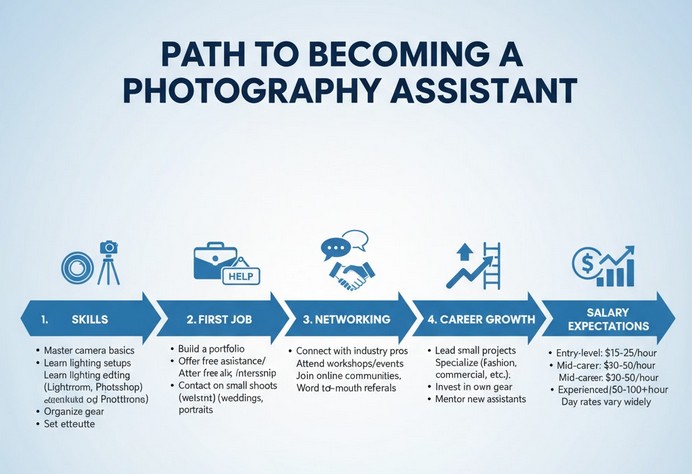
Being a successful photography assistant isn’t just about showing up with a camera. It requires a blend of technical knowledge, creativity, and professional soft skills. Developing the right skill set can make you indispensable to a professional photographer and set the stage for your own career growth.
Here are the key skills every photography assistant should have:
1. Technical Photography Skills
Even as an assistant, understanding the technical side of photography is crucial. This includes:
- Camera operation: Knowing how DSLR and mirrorless cameras work, including focus, exposure, and shutter speed
- Lighting setup: Understanding natural and artificial lighting, softboxes, reflectors, and flash systems
- Equipment handling: Safe setup and transportation of delicate cameras, lenses, tripods, and lighting gear
Tip: Assistants who can troubleshoot technical issues on the spot are highly valued.
2. Organizational and Time Management Skills
Photography assistants often juggle multiple tasks simultaneously. Strong organizational skills are essential:
- Keeping track of props, costumes, or equipment
- Managing schedules and timelines for shoots
- Preparing checklists to ensure nothing is forgotten
Proactive assistants save the photographer time and prevent last-minute chaos.
3. Creativity and Visual Awareness
A good assistant doesn’t just move lights—they notice details:
- Spotting inconsistencies in lighting, shadows, or composition
- Suggesting minor adjustments to improve shots
- Understanding the photographer’s vision and style
Even small creative contributions can leave a lasting impression.
4. Communication and Interpersonal Skills
Working closely with photographers, models, stylists, and clients requires clear communication:
- Following instructions accurately
- Asking relevant questions at the right time
- Maintaining professionalism under pressure
Strong interpersonal skills also help in networking and securing future job opportunities.
5. Adaptability and Problem-Solving
Photo shoots rarely go exactly as planned. A great assistant:
- Quickly adjusts to changes in weather, lighting, or schedule
- Finds solutions to unexpected technical problems
- Stays calm and resourceful during high-pressure shoots
Pro Tip: Being adaptable makes you a reliable and indispensable assistant.
6. Post-Production Awareness
While editing may not always be your responsibility, familiarity with post-production tools is helpful:
- Basic photo editing (light adjustments, color correction)
- Organizing files for the photographer
- Understanding workflow from shoot to final delivery
This knowledge shows that you understand the full photography process, making you more effective on set.
How to Get Started as a Photography Assistant
Breaking into photography can feel daunting, but there are clear steps to launch your career as an assistant.
1. Gain Relevant Education and Training
While a formal degree isn’t always required, education can help:
- Photography courses: Community college or online courses in photography basics
- Workshops and masterclasses: Short-term programs focusing on lighting, studio work, or fashion photography
- Internships: Hands-on learning through photography internships provides practical experience
2. Build Practical Experience
Experience is everything in photography. Start small and build your portfolio:
- Assist friends or local photographers on small projects
- Volunteer at events, fashion shoots, or local studios
- Create personal projects to practice lighting, composition, and equipment setup
Even unpaid work initially can open doors to paid assistant roles later.
3. Network with Professional Photographers
Photography is a relationship-driven industry. Build connections:
- Attend photography workshops, seminars, and networking events
- Engage with photographers on social media or photography forums
- Ask for informational interviews or shadowing opportunities
Pro Tip: A strong network often leads to job opportunities faster than online applications.
4. Build a Professional Portfolio
A portfolio isn’t just for photographers. It shows what you’ve done as an assistant:
- Document the shoots you’ve assisted on
- Highlight your role: lighting setups, equipment handling, or organizational contributions
- Include before-and-after shots if you helped with editing
A portfolio demonstrates your experience, skills, and reliability to prospective photographers.
5. Apply for Assistant Photographer Jobs
Once you have skills and experience, start applying for roles:
- Job boards: PhotographyJobs.com, Indeed, Glassdoor
- Studio websites: Many professional studios post assistant openings
- Direct outreach: Email photographers politely with your portfolio and availability
6. Be Persistent and Professional
Breaking into photography can be competitive. Key traits to succeed include:
- Consistency in showing up on time and prepared
- Flexibility to take on different types of shoots
- Willingness to learn and adapt
Persistence pays off, and every shoot is an opportunity to gain experience and make a lasting impression.
Finding and Applying for Photography Assistant Jobs
Once you have the necessary skills and some experience, the next step is finding photography assistant jobs. While this can feel competitive, knowing where and how to look dramatically increases your chances of success.
1. Job Boards and Online Platforms
Several websites specialize in photography and creative industry jobs:
- PhotographyJobs.com – Lists assistant positions in various photography niches
- Indeed and Glassdoor – Search using “assistant photographer” or “photography assistant”
- Creativepool and Behance – Useful for connecting with professional photographers
Pro Tip: Set up job alerts on these platforms using keywords like assistant photographer jobs or photography studio assistant to receive notifications automatically.
2. Studio Websites and Local Photography Companies
Many photography studios post job openings directly on their websites. Research studios in your city or region and check their career pages regularly.
- Fashion and commercial studios often hire assistants for ongoing projects
- Wedding and event photographers may need occasional help for large events
- Local art and portrait studios sometimes hire assistants for short-term projects
Contacting studios directly with a polished email and portfolio can set you apart from other candidates.
3. Networking and Referrals
Networking is one of the most effective ways to land assistant positions:
- Attend photography workshops, trade shows, and expos to meet industry professionals
- Join photography associations or local clubs
- Connect with photographers on Instagram, LinkedIn, or photography forums
- Ask photographers you’ve assisted previously for referrals
Pro Tip: Referrals carry a lot of weight because photographers know your skills and reliability firsthand.
4. Crafting Your Application
Your resume and portfolio are critical:
- Resume: Highlight relevant skills, technical knowledge, and any hands-on experience
- Portfolio: Even as an assistant, showcase your contributions, like lighting setups, organizational skills, and minor editing work
- Cover Letter: Keep it concise, professional, and tailored to the specific photographer or studio
5. Freelance and Short-Term Opportunities
Freelancing can provide diverse experience and networking opportunities:
- Sign up for gig platforms like Upwork or Fiverr for photography support roles
- Offer assistance to photographers on weddings, events, or commercial shoots
- Freelance work builds your reputation and can lead to recurring jobs
Tips for a Successful Career as a Photography Assistant
Landing a photography assistant job is just the beginning. To thrive and advance in your career, adopt these strategies:
1. Be Proactive and Take Initiative
Successful assistants don’t wait for instructions—they anticipate needs:
- Prepare equipment before the photographer asks
- Suggest minor improvements without overstepping
- Keep the set organized and ready for any changes
Proactive assistants often become trusted collaborators and are first considered for future projects.
2. Learn Continuously
Photography is always evolving. Stay updated on:
- Technical trends: New cameras, lenses, lighting equipment
- Software tools: Adobe Lightroom, Photoshop, Capture One
- Industry standards: Shooting techniques, studio workflows, and client expectations
Pro Tip: Taking online courses or attending workshops can help you stand out.
3. Build Strong Professional Relationships
Your network can define your career trajectory:
- Be respectful and professional to photographers, clients, and other assistants
- Maintain connections even after short-term projects
- Offer help beyond your immediate duties when appropriate
LSI keywords: tips for photography assistant, supporting photographers, photography career path
4. Stay Organized and Reliable
Reliability is critical:
- Arrive on time and prepared for every shoot
- Keep track of schedules, props, and files
- Follow through on commitments, like returning gear or sending edited files
Photographers often value reliability over raw talent for long-term assistant roles.
5. Document Your Work and Build a Portfolio
Even as an assistant, documenting your work is essential:
- Take notes on lighting setups, equipment arrangements, and behind-the-scenes techniques
- Collect before-and-after shots if your work involved adjustments
- Maintain a portfolio showcasing your contributions
This portfolio not only demonstrates your experience but also positions you for future promotions or freelance work.
6. Prepare for Growth Opportunities
A photography assistant role can be a stepping stone to:
- Lead assistant positions on larger projects
- Freelance opportunities with multiple photographers
- Independent photography career once you gain enough experience
Pro Tip: Keep learning and expanding your skill set so you can transition from assistant to full-time professional photographer.
Photography Assistant Salary and Career Outlook
Understanding the salary and career prospects for photography assistants helps set realistic expectations and plan for growth. Compensation varies widely depending on experience, location, and type of photography.
1. Salary Overview
- Entry-Level Assistants: Typically earn $25,000–$35,000 per year or $15–$25 per hour, depending on location and type of work.
- Experienced Assistants: With 2–5 years of experience, salaries can rise to $40,000–$55,000 per year.
- High-End Commercial/Fashion Assistants: Working on major campaigns or with renowned photographers can earn $60,000+ annually, sometimes with freelance bonuses per project.
Freelance assistants often charge per day or per project, with rates ranging from $150–$500 per day depending on the complexity of the shoot.
Pro Tip: Always clarify pay expectations upfront, especially for freelance or temporary gigs.
2. Career Outlook
The photography industry continues to grow across commercial, fashion, wedding, and digital media sectors. A photography assistant role can lead to:
- Lead assistant or studio manager positions
- Freelance assistant opportunities with multiple photographers
- Transitioning into full-time professional photography
While the role may not be the most lucrative entry point, it provides invaluable experience, networking opportunities, and industry insights that can accelerate a photography career.
Frequently Asked Questions (FAQs)
Not necessarily. While formal education in photography or media can help, hands-on experience, a strong portfolio, and relevant skills are far more important.
Entry-level positions often accept candidates with minimal experience, especially if they demonstrate technical knowledge, reliability, and enthusiasm. Internships, volunteering, or personal projects can count as valuable experience.
Familiarity with DSLR and mirrorless cameras, lighting equipment, tripods, reflectors, and basic editing software (Lightroom, Photoshop) is highly recommended.
Yes! Many professional photographers start as assistants to gain experience, build a network, and understand workflow. Over time, assistants can launch their own photography careers or specialize in high-demand niches.
Reliability, adaptability, technical skills, strong communication, attention to detail, and a proactive attitude are key qualities.
Final Advice
Becoming a photography assistant is a rewarding way to break into the photography industry. It provides hands-on experience, skill development, and professional networking opportunities that are difficult to gain elsewhere.
Key Takeaways:
- Understand the Role: Know the responsibilities, from equipment setup to post-shoot support.
- Develop Skills: Technical knowledge, organization, creativity, and adaptability are essential.
- Gain Experience: Start with internships, volunteering, or small projects to build your portfolio.
- Network Actively: Connections in the photography industry often lead to the best opportunities.
- Stay Professional: Reliability, proactive communication, and a willingness to learn are invaluable.
- Plan for Growth: Use the assistant role as a springboard toward freelancing, lead positions, or a full-time photography career.
Remember, the path may require patience and persistence, but each shoot is a chance to learn, grow, and establish your reputation in the industry. By following this guide, you’ll be fully prepared to launch a successful career as a photography assistant and beyond.