If you’re a photographer in 2025, your camera isn’t your only tool. Your phone screen—and more specifically, your social media presence—can be the difference between a fully booked calendar and an empty inbox.
Here’s the reality:
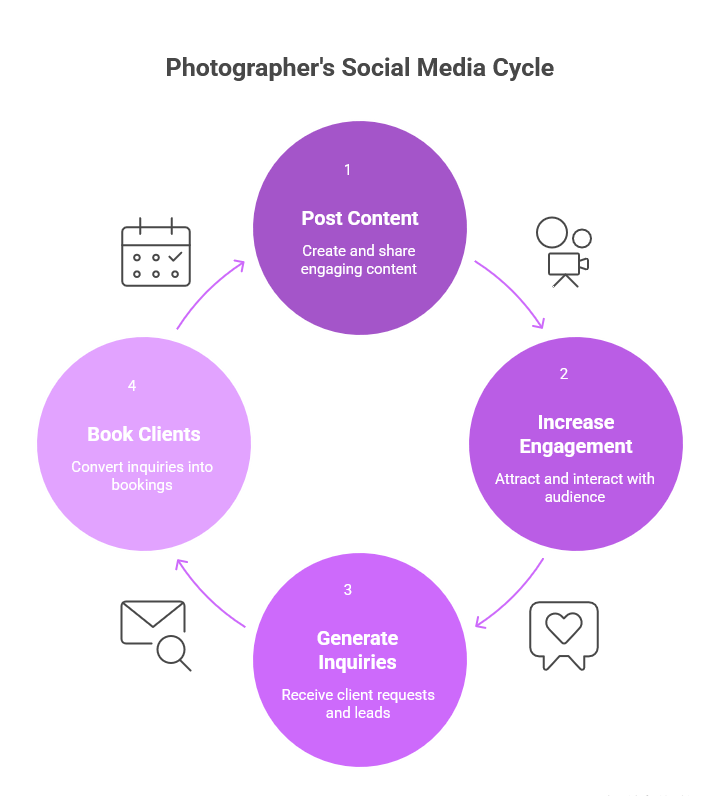
- More than 70% of clients say they discovered their photographer through Instagram or TikTok.
- On average, photographers who post consistently on social media generate 2x more inquiries than those who rely only on referrals.
- Social platforms aren’t just for pretty pictures anymore. They’re marketplaces, networking hubs, and lead-generation machines.
And yet… most photographers struggle with social media. Common complaints sound like this:
- I don’t know what to post.
- Hashtags don’t work for me.
- I’m posting but I’m not getting clients.
That’s exactly why I created this ultimate guide. In the next few sections, you’ll discover 27 proven strategies complete with templates, examples, and real results. To help you grow your audience, increase engagement, and most importantly, book more clients through social media.
And to make it even easier, I’ve put together a free 30-Day Photography Content Calendar + Caption Templates you can download at the end of this article.
Let’s dive in.
Why Social Media Marketing is Essential for Photographers in 2025
Ten years ago, photographers could build thriving businesses on word-of-mouth alone. Fast forward to today, and the landscape has changed dramatically. Couples book wedding photographers on Instagram. Brands scout product photographers on TikTok. Pinterest boards shape entire photoshoot trends.
So, if you’re still relying only on referrals or the occasional Google search, you’re leaving money on the table.
Here’s why social media is now essential for photographers:
1. It’s Where Your Clients Are
Think about your ideal client. Newly engaged couples, small business owners, influencers, parents of newborns—they’re all spending hours a day on Instagram, TikTok, Pinterest, and Facebook. If your work isn’t showing up in their feed, another photographer’s is.
Example: A wedding photographer in Texas shared that 80% of her 2024 bookings came directly from Instagram DMs. The photographers didn’t run ads. She didn’t cold call. She simply shared consistent content, used smart hashtags, and engaged with couples in local wedding groups
2. Social Proof = Trust
Photography is a trust-based business. People aren’t just hiring you for photos—they’re hiring you to capture once-in-a-lifetime moments.
When potential clients see your work displayed consistently on social media, with real testimonials, behind-the-scenes videos, and before/after edits, they start to trust you—sometimes before you’ve even exchanged a single message.
Data point: According to a 2024 marketing report, 63% of consumers say they’re more likely to hire a creative professional if they can view their work on social media first.
3. It Levels the Playing Field
The beauty of social media marketing is that it doesn’t require a massive budget. With the right content strategy, a solo photographer can compete with established studios—and often win.
In fact, many photographers are getting more traction from organic TikTok videos and Reels than from expensive paid ads.
4. It’s an Evergreen Marketing Asset
Unlike a one-off print ad or a bridal expo booth, social media content compounds over time. A well-optimized Instagram Reel can continue generating inquiries months after it’s posted. A Pinterest pin can drive traffic for years.
Organic vs Paid Social Media for Photographers
At this point, you might be wondering: “Should I focus on organic content or start running ads?”
The answer is both, but timing matters.
- Organic Content: Best for building brand awareness, showing off your portfolio, and engaging with potential clients for free. Posting consistently (3–4 times a week) builds authority and keeps you top of mind.
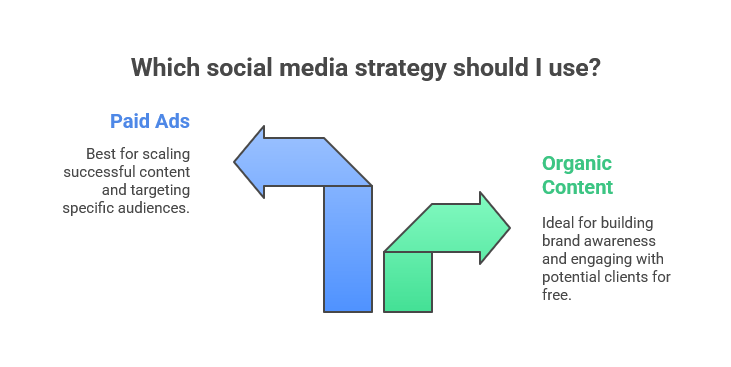
- Paid Ads: Best for scaling once you already know what kind of content works. For example, if a behind-the-scenes Reel consistently gets high engagement, turning it into a targeted Instagram or Facebook ad can put your work in front of local couples, brands, or families who need your services.
Case Study: A portrait photographer in London tested $200 worth of Instagram ads targeting “new moms within 25 miles.” The result? 14 inquiries and 5 booked sessions—an estimated $2,000 in revenue.
The takeaway: Use organic to test, and ads to amplify.
Why 2025 is the Year to Double Down
Social platforms are pushing harder than ever on visual content. Instagram continues to prioritize Reels. TikTok is experimenting with long-form content. Pinterest is building more e-commerce features for creators.
For photographers, this is the perfect storm. Platforms want your visual content, and clients are looking for you there. That means the sooner you double down on social media, the bigger advantage you’ll have over competitors who are still treating it like an afterthought.
Social Media Platforms for Photographers (Which One is Best?)
Now that we’ve covered why social media matters, let’s break down the platforms that actually drive results for photographers. Not every platform will work the same way for every niche. Wedding photographers, product photographers, and portrait shooters may see very different outcomes.
That’s why it’s critical to know where your audience spends their time—and how each platform plays to your strengths.
Instagram for Photographers: Why It’s Still King
If there’s one platform photographers can’t afford to ignore, it’s Instagram.
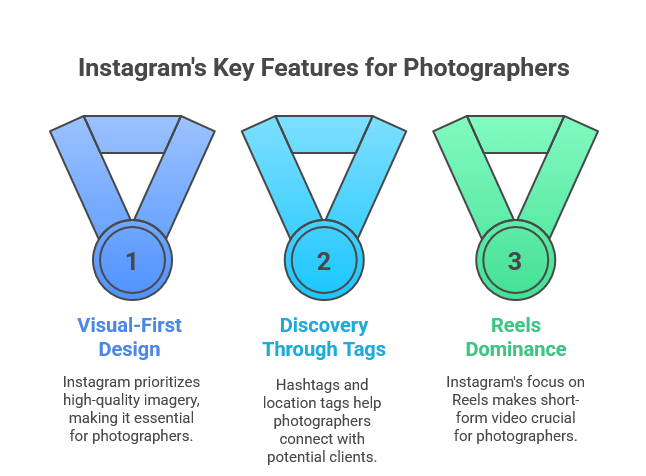
- Visual-first design: Instagram was built around photos and still favors high-quality imagery.
- Discovery through hashtags & location tags: Couples searching for “NYC wedding photographer” often start on Instagram.
- Reels dominance: Instagram is prioritizing Reels, making short-form video essential.
Actionable tips:
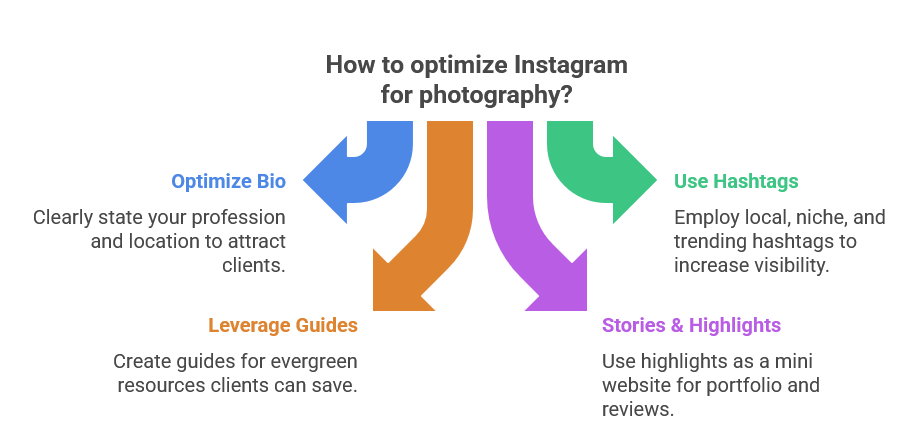
- Optimize your bio: Make sure it says what you do and where you’re based. Example: Wedding Photographer | NYC & Beyond | Booking 2025 couples | DM for Availability.
- Use 3 sets of hashtags: One set for local clients, one for niche (e.g., #NYCWedding, #EngagementShoot), one for trending general photography. Rotate them.
- Leverage Guides: Create Guides around Best Wedding Venues in NYC or Top 10 Photoshoot Locations in Chicago. These double as evergreen resources clients save.
- Stories & Highlights: Use highlights as your mini website—Portfolio, Reviews, Pricing, Behind-the-Scenes.
Mini case study: A Los Angeles portrait photographer grew from 2K to 15K followers in under a year by posting daily Reels showcasing editing transformations. Each Reel ended with a call-to-action: DM me ‘session’ for availability. She books 70% of her clients straight from Instagram DMs.
TikTok for Photographers: Fast Growth & Viral Reach
TikTok is no longer just for dance videos—it’s a discovery engine. Its algorithm favors creators who post consistently, even with small followings.
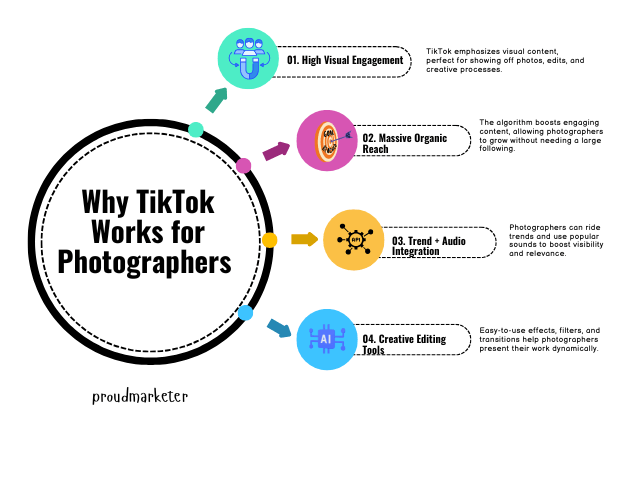
Why TikTok works for photographers:
- Viral potential is higher than on Instagram.
- Authentic, behind-the-scenes content performs best.
- Perfect for showing process, personality, and results.
Actionable tips:
- Behind-the-scenes videos: Show your workflow, lighting setup, or a “day in the life” as a photographer.
- Transformation edits: Post before/after editing reveals.
- Educational content: 3 Tips for Looking Natural in Photos or How to Pose Couples.
- Trending sounds: Pair photography tips with trending audio clips for added reach.
Mini case study: A UK-based wedding photographer posted a simple clip titled 3 poses every couple should know. It hit 1.2M views, gained her 12K followers in 2 weeks, and generated 40+ wedding inquiries.
Pinterest for Photographers: Passive Discovery & Bookings
Pinterest is often overlooked, but it’s a powerhouse for long-term traffic. It’s essentially a visual search engine. Couples, families, and brands use it to plan weddings, shoots, and campaigns.
Why Pinterest is gold:
- Pins can drive traffic for years.
- Highly popular with brides-to-be, moms, and DIY brands.
- Perfect for SEO-minded photographers.

Actionable tips:
- Create boards by niche: “Boho Wedding Photography Ideas,” “Newborn Session Inspiration,” “Brand Photoshoot Examples.”
- Pin your blog posts: If you run a website or blog, pin every article with optimized titles and descriptions.
- Use vertical graphics: Pinterest favors tall, text-overlay pins like “10 Engagement Poses to Try.”
- Consistency wins: Pin at least 5–10 times per week (using schedulers like Tailwind makes this easy).
Mini case study: A lifestyle photographer in Toronto created a Family Photoshoot Outfit Guide pin that now drives 300 visits per month to her website—and accounts for 20% of her leads.
YouTube for Photographers: Long-Form Trust & Authority
If Instagram and TikTok are for quick impressions, YouTube is where you build deep authority. It’s also the world’s second-largest search engine.
Why YouTube matters:
- Videos rank in Google search results.
- Great for tutorials, gear reviews, and vlogs.
- Builds long-term trust with potential clients.
Actionable tips:
- Educational content: Teach posing tips, editing hacks, or location scouting.
- Client vlogs: Share behind-the-scenes from actual sessions.
- Gear reviews: Photographers often get discovered through gear-related searches (“Best lens for wedding photography”).
- Local SEO: Title videos with local keywords: “Chicago Wedding Photographer | Behind the Scenes.”
Mini case study: A wedding photographer in Sydney started a YouTube channel where she reviewed venues and showed real couple shoots. Within 6 months, she was ranking for Sydney wedding venues, bringing in organic leads from couples who found her videos while venue-hunting.
Facebook & LinkedIn: Underrated Client Channels
These platforms aren’t as “sexy” as TikTok or Instagram, but they can still drive serious business—especially in local or B2B markets.
Facebook:
- Great for family photographers targeting local moms’ groups.
- Facebook Marketplace & Events can be leveraged to advertise mini sessions.
- Facebook Ads still dominate for hyper-local targeting.
LinkedIn:
- Perfect for corporate headshot and brand photographers.
- Build authority by posting case studies of client shoots.
- Engage in industry groups (e.g., real estate professionals often need new headshots).
Mini case study: A corporate photographer in New York landed a contract with a law firm after sharing a simple LinkedIn post: “5 Tips for Looking Confident in Your Headshot.” The post was reshared within the legal community, leading to 15 inbound inquiries.
Which Platform Should You Focus On?
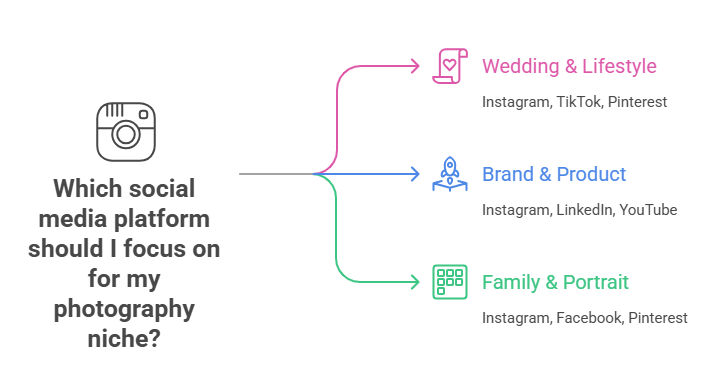
The answer depends on your niche:
- Wedding & Lifestyle Photographers → Instagram + TikTok + Pinterest
- Brand & Product Photographers → Instagram + LinkedIn + YouTube
- Family & Portrait Photographers → Instagram + Facebook + Pinterest
The key is not to spread yourself too thin. Pick 2–3 platforms, master them, and only expand once you’re seeing consistent results.
27 Proven Social Media Strategies for Photographers (With Real Results)
We’ve talked about why social media matters and which platforms to prioritize. Now, let’s dig into the step-by-step playbook.
These aren’t generic “post more often” tips. Each one is a battle-tested strategy photographers are already using in 2025 to:
- Grow followers organically
- Boost engagement
- Build authority in their niche
- And most importantly… book more paying clients
Let’s break them down into 6 key categories:
- Profile Optimization
- Content Creation
- Engagement Tactics
- Growth Strategies
- Booking-Focused Strategies
- Advanced Moves
1. Profile Optimization
1. Nail Your Bio (Client-Focused, Not Self-Focused)
Your bio is the first thing people see—and it has to answer 3 questions fast:
- Who are you?
- Who do you serve?
- How can people work with you?
Instead of:
❌ Photographer. Coffee lover. Dream chaser.
Try:
✅ Wedding Photographer | Chicago & Destination | Booking 2025 Couples | DM for details
Pro Tip: Always include your location (local SEO keyword) and a clear CTA.
2. Use a Professional Profile Photo
Skip the artsy logo or blurry selfie. People connect with people. A smiling headshot or a photo of you holding a camera builds instant trust.
Case Study: A newborn photographer in Toronto swapped her logo for a warm portrait of her holding a baby wrap. Within 2 months, her follower growth rate increased by 23%.
3. Add a Lead Magnet in Your Bio Link
Don’t just link to your homepage. Offer value upfront to capture leads. Examples:
- Free Engagement Outfit Guide
- Mini Session Pricing PDF
- Top 10 Posing Tips for Couples
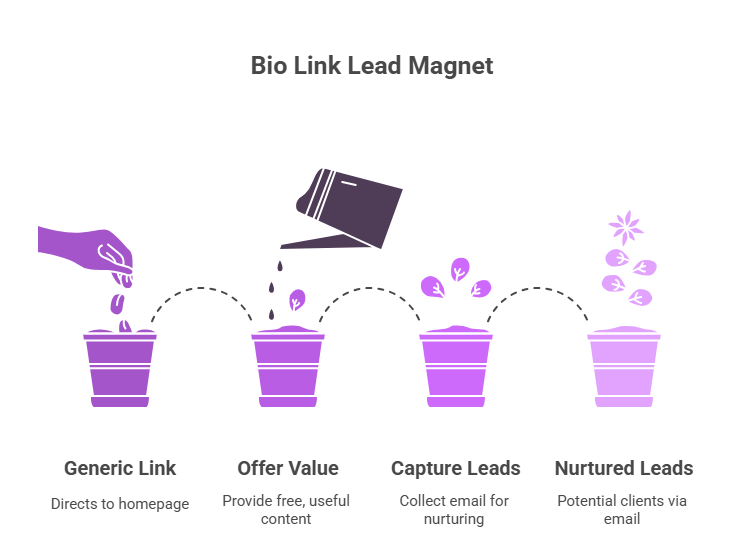
That way, even if someone isn’t ready to book, you can nurture them via email later.
2. Content Creation
4. Share Behind-the-Scenes (BTS) Content
Clients love to see the process. Short clips of you fixing a veil, adjusting lighting, or making clients laugh build trust.
Example: One wedding photographer in Austin recorded herself shooting a first look. That 12-second Reel hit 1.2M views and generated 30+ inquiries.
5. Post Before/After Edits
Show raw → final. Clients are fascinated by transformations.
Pro Tip: Use Instagram’s “swipe” carousel feature to show editing power step by step. Bonus if you include a timelapse screen recording of your Lightroom edits.
6. Highlight Client Testimonials as Graphics
Turn your 5-star reviews into visual posts.
- Add the client’s photo.
- Overlay their quote.
- End with your handle + CTA.
Result: A family photographer in LA noticed testimonial posts got 2x more shares than her normal portfolio posts.
7. Leverage User-Generated Content (UGC)
Encourage clients to share their images and tag you. Reshare with permission. This extends your reach into their network—basically free word-of-mouth on steroids.
8. Tell Stories with Carousels
Carousels are still king for engagement on Instagram. Try a sequence like:
- Slide 1: Eye-catching teaser (From Proposal to Wedding in 5 Frames)
- Slide 2–4: Key photos
- Slide 5: Final hero shot + CTA
These posts drive high saves and shares.
9. Post Educational Content
Educating your audience builds authority. Examples:
- 3 Tips to Look Natural in Photos
- What to Wear for a Beach Session
- Best Lighting Times for Engagement Shoots
This positions you as more than a photographer—you become a trusted guide.
3. Engagement Tactics
10. The 5-3-1 Rule
Every day:
- Comment on 5 posts
- Reply to 3 Stories
- DM 1 potential client
This micro-engagement adds up. One portrait photographer booked 3 sessions in a month just by consistently applying this strategy.
11. Use Interactive Stories (Polls, Q&A, Sliders)
Algorithms reward engagement. Stories are perfect for it. Ask:
- “Beach or City shoot?”
- “Which photo edit do you prefer?”
Not only do you boost engagement, but you also collect client preferences you can use later.
12. DM With Value, Not Sales Pitches
Nobody likes cold DMs. Instead of “Hey, book me,” try:
- “Loved your engagement photos! Here’s a tip for your next shoot: wear lighter tones for a softer look.”
You build rapport and stand out as genuinely helpful.
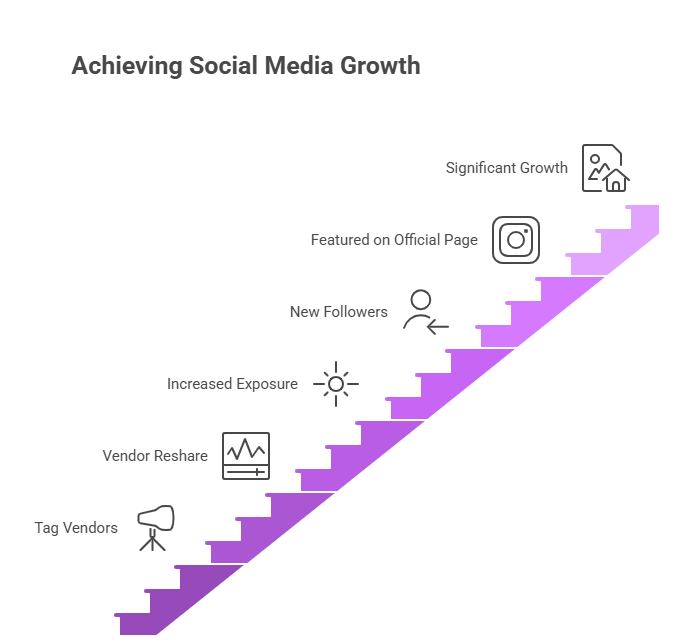
13. Collaborate With Vendors
Tag florists, venues, makeup artists, and planners. Vendors often reshare, exposing you to hundreds of relevant followers.
Case Study: A Chicago photographer tagged a wedding venue in every post. The venue later featured her in their official Instagram, driving 1,200 new followers in 2 weeks.
4. Growth Strategies
14. Post Reels 3–4 Times Per Week
Reels are Instagram’s primary growth engine in 2025. Keep them short (7–15s), use trending audio, and include quick transformations or BTS.
Pro Tip: Add captions—85% of Reels are watched without sound.
15. Rotate Hashtag Buckets
Create 3–5 groups of hashtags:
- Local (#ChicagoWeddingPhotographer)
- Niche (#LifestylePhotography)
- Trend (#GoldenHourMagic)
Rotate them to avoid spam signals and maximize reach.
16. Geotag Every Post
Local clients search via geotags. If you don’t tag your city or venue, you’re invisible.
SEO Hack: Use location hashtags + geotags together for double discovery.
17. Jump on Trends Early
Trends = free reach. On TikTok, use trending sounds within 24–48 hours. Even one viral video can change your business.
Example: A portrait photographer in London posted a “glow-up” TikTok with trending audio. It hit 800K views and brought in 5 brand partnerships.
18. Repurpose Content Across Platforms
A single photoshoot = 10+ posts:
- Instagram carousel
- TikTok BTS clip
- Pinterest Pin
- YouTube Shorts montage
- Blog post recap
Backlinko’s Law: “Create once, distribute everywhere.”
5. Booking-Focused Strategies
19. Add CTAs to Every Post
Never post without telling people what to do next.
Examples:
- “DM me ‘2025’ for wedding pricing.”
- “Save this pose guide for later.”
- “Tag a friend who’s planning a wedding.”
20. Offer Limited-Time Mini Sessions
Scarcity drives action. Announce seasonal minis with urgency:
- Spring Minis 10 spots only!
- Holiday Sessions Limited to 5 families.
These posts often generate quick cash flow.
21. Be Transparent with Pricing
Even if you don’t share full packages, include Starting at $500. This filters serious leads and reduces time wasted on price shoppers.
22. Highlight Client Transformations
Clients care about results, not just photos. Showcase transformations like:
- “From camera shy → confident in 20 minutes.”
- “From cloudy day → golden light edit.”
This proves your expertise.
23. Use Video Testimonials
Video > text. A 15-second clip of a bride saying “She made us feel so comfortable” will outperform a paragraph of text.
6. Advanced Moves
24. Create a Recurring Content Series
Series build anticipation. Example:
- “Pose of the Week”
- “Editing Secrets Fridays”
- “Wedding Venue Spotlights”
Followers come back knowing what to expect.
25. Cross-Promote Platforms
Don’t silo your audience. Example:
- On Instagram: “Watch the full BTS vlog on YouTube.”
- On YouTube: “For daily tips, follow my Instagram.”
Cross-promotion multiplies reach.
26. Partner With Local Influencers
Offer a free shoot in exchange for exposure. Pick micro-influencers (5K–20K followers) in your niche.
Case Study: A family photographer in Austin collaborated with a local mom blogger. The result? 4,000 new followers and 9 booked sessions.
27. Track Analytics (and Ruthlessly Optimize)
At least once a month, audit:
- Which posts brought inquiries?
- Which got the most saves or shares?
- Which platforms drive leads?
Kill what’s not working. Double down on what is.
Pro Tip: On Instagram, “saves” and “shares” are stronger indicators than “likes.”
Quick Recap (TLDR)
- Profile Optimization → Bio, profile photo, lead magnet
- Content Creation → BTS, before/after, stories, testimonials
- Engagement Tactics → 5-3-1 rule, polls, vendor collabs
- Growth Strategies → Reels, hashtags, geotags, trends, repurposing
- Booking Strategies → CTAs, mini sessions, pricing clarity, testimonials
- Advanced Moves → Series, cross-promotion, influencer collabs, analytics
Why These Strategies Work
The real magic is in combining visibility + authority + conversion:
- Visibility = Reels, hashtags, geotags, vendor collabs
- Authority = Testimonials, educational posts, case studies
- Conversion = CTAs, mini sessions, urgency, DMs
When executed together, this system doesn’t just grow your follower count—it turns your social media into a 24/7 lead-generation machine.
Content Templates, Tools & Case Studies: How to Turn Social Media Followers into Paying Clients
We’ve covered why social media matters, which platforms to use, and 27 proven strategies. Now it’s time to put it all together and focus on what matters most: turning attention into clients.
5 Social Media Content Templates for Photographers
One of the biggest struggles photographer’s faces is: “What do I post?”
Here are 5 plug-and-play templates you can use right away (and recycle endlessly).
Template 1: Before & After Transformation Post
- Photo 1: RAW, unedited shot.
- Photo 2: Final edited image.
- Caption: Here’s the magic of editing. Which do you prefer—unedited vs final?
- CTA: DM me ‘edit’ if you want this level of transformation for your shoot.
Template 2: Client Story Carousel
- Slide 1: Couple’s first photo (engagement).
- Slide 2–4: Behind the scenes + wedding shots.
- Slide 5: Final “hero” photo.
- Caption: Tell their story in 3–4 sentences.
- CTA: Save this for inspiration.
Template 3: Educational Reel
- Hook: 3 posing tips to look natural on camera.
- Quick demos (7–10 seconds each).
- CTA: Tag your partner—this will save you at your next shoot.
Template 4: Seasonal Mini-Session Promo
- Visual: Canva graphic with clear offer.
- Caption: Fall mini sessions are back! 10 spots only. Link in bio to book.
- CTA: Strong urgency.
Template 5: BTS TikTok
- Clip: You adjusting lighting, fixing poses, laughing with clients.
- Overlay text: What it’s like working with me as your photographer.
- CTA: Follow for more BTS and tips!
These templates keep your feed professional, engaging, and client focused.
How to Convert Followers into Clients
Growing followers is step one. But you don’t pay your rent in likes. Let’s break down how to turn that audience into actual clients.
1. Create a Lead Magnet
Offer something useful in exchange for email addresses.
Examples:
- Engagement Session Outfit Guide
- 10 Poses for Couples Who Hate Being Photographed
- Newborn Photography Prep Checklist
Once they download, you can follow up with emails and offers.
2. Use Strong CTAs in Every Post
Never post without a CTA. Even simple ones like:
- Save this for your wedding planning board.
- DM me ‘pricing’ if you’re interested.
- Tag a friend who just got engaged.
3. Build Social Proof with Testimonials
Highlight real client experiences in posts, Stories, and Reels. Bonus if you can capture video testimonials.
4. Leverage DMs as a Sales Channel
The fastest way to book clients? DMs. Respond quickly, use voice notes for a personal touch, and move conversations toward booking.
5. Run Limited-Time Offers
Scarcity sells. Run promos like:
- Mother’s Day Minis—5 slots left
- 2025 Weddings — 50% booked, now reserving fall dates
Paid Ads for Photographers (When & How to Use Them)
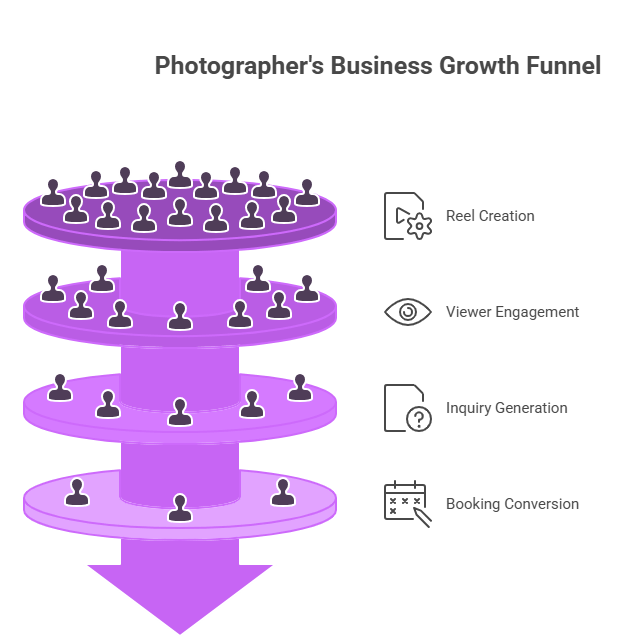
Organic growth is powerful, but at some point, you’ll want to scale. That’s where paid ads come in.
Best Platforms for Photographer Ads
- Instagram & Facebook Ads: Best for weddings, portraits, family shoots.
- TikTok Ads: Great for targeting Gen Z & young couples.
- Pinterest Ads: Powerful for wedding and maternity niches.
How to Structure Your First Ad Campaign
- Choose a Goal → Leads, not just likes.
- Target Locally → 15–25 miles around your city.
- Use a Proven Post → Don’t guess. Run ads on your top-performing Reel or carousel.
- Have a Clear CTA → “Book now” or “Download guide.”
Case Study: A Chicago wedding photographer ran $150 worth of IG ads promoting “Now Booking 2025 Weddings.” Result? 18 inquiries, 6 bookings, and $7,000 revenue.
Must-Have Tools for Social Media Success
You don’t need dozens of tools—but a few can save hours and improve results.
- Canva → Design graphics, carousels, promos.
- Later / Buffer → Schedule posts ahead of time.
- CapCut → Edit short-form videos easily.
- Notion / Trello → Plan your content calendar.
- Meta Ads Manager → For Facebook & Instagram campaigns.
- Pinterest Business Account → For analytics + scheduling.
Real-World Case Studies
Let’s look at how real photographers are using these strategies:
Case Study #1: The Wedding Photographer Who Doubled Inquiries with Reels
- Location: Austin, TX
- Strategy: Posted 3 Reels per week showing BTS + emotional moments.
- Result: From 10 to 25 inquiries/month in 3 months.
Case Study #2: Newborn Photographer Using Pinterest
- Location: Toronto
- Strategy: Posted 15 Pins/week optimized for “Toronto newborn photographer.”
- Result: 40% of bookings now come from Pinterest leads.
Case Study #3: Portrait Photographer Leveraging TikTok
- Location: London
- Strategy: Shared “posing tip” videos + client glow-up edits.
- Result: 100K followers, brand partnerships, fully booked calendar.
Frequently Asked Questions
What’s the best social media platform for photographers?
Instagram is still the #1 platform for photographers in 2025, thanks to its visual-first format, Reels, and strong discovery features like hashtags and geotags. However, TikTok is catching up fast for reaching Gen Z and younger couples, while Pinterest dominates wedding and maternity searches. The best approach? Focus on Instagram as your core platform, then repurpose content to TikTok, Pinterest, and YouTube Shorts.
How often should photographers post on Instagram?
Most experts recommend posting 3–4 times per week, plus daily Stories. Quality and consistency matter more than posting every day. For photographers, a steady mix of behind-the-scenes clips, client testimonials, and portfolio carousels works best.
Do photographers really need social media to get clients?
Yes. In 2025, social media is one of the top discovery channels for photographers. While referrals and SEO still matter, most clients expect to see your work on Instagram or TikTok before booking. In fact, studies show over 70% of clients check a photographer’s social profile before inquiring.
What’s the fastest way for photographers to grow followers?
Short-form video. Instagram Reels and TikTok posts showcasing transformations, posing tips, or behind-the-scenes moments are proven to go viral faster than static posts. Pair them with trending sounds and location hashtags for maximum reach.
How do photographers market themselves online besides social media?
Social media is powerful, but not the only option. Many photographers also use a blog (SEO), email newsletters, collaborations with local vendors, and Google Business Profile to attract clients outside of Instagram or TikTok.
Conclusion: It’s Time to Own Your Market
Social media for photographers isn’t just about likes—it’s about building a brand, attracting your dream clients, and scaling your business.
Here’s the bottom line:
- Optimize your profile → Make it client focused.
- Post strategic content → BTS, stories, testimonials, education.
- Engage daily → Comments, DMs, vendor collabs.
- Use offers & CTAs → Move followers into your funnel.
- Scale with ads → Once organic is working.
If you apply even 5 of the 27 strategies we’ve covered, you’ll start seeing more engagement, more inquiries, and more bookings.
And if you go all-in? You won’t just grow a following. You’ll build a photography business that thrives in 2025 and beyond.