
Every photographer has been there.
You send a detailed proposal. You’ve poured hours into crafting the perfect offer carefully explaining your packages, editing time, and creative process. Then, the email hits your inbox:
Hey, thanks for your time! We really loved your work, but we found another photographer who can do it for less.
Ouch.
Your heart sinks. You start questioning your rates, your worth, maybe even your entire business.
But here’s the truth: this moment isn’t a dead end. It’s an opportunity.
Because when a client says they found someone cheaper, they’re not rejecting you.
They’re asking for clarity. They’re trying to understand the difference between price and value.
And if you know how to respond, you can turn that uncomfortable moment into a confident, professional conversation that either wins the client back or gracefully filters out the wrong ones.
In this guide, you’ll learn exactly how to do that.
We’ll cover:
- Why clients say they found someone cheaper (it’s not always about money)
- The 5-step framework for handling price objections like a pro
- Exact scripts you can use in emails or calls
- How to position your value so price stops being the deciding factor
- And how to prevent this situation from happening in the first place
Let’s dive in.
Also Read: The Ultimate Guide: SEO for Wedding Photographers (Proven to Book More Clients)
Why Clients Say We Found Someone Cheaper
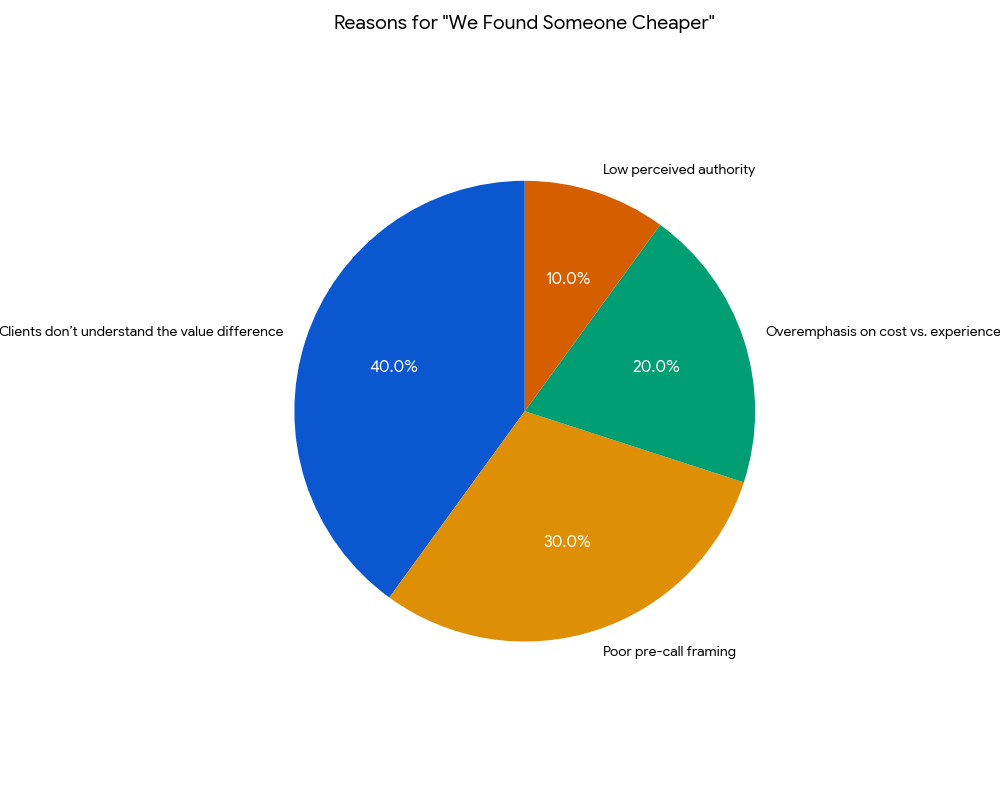
Before you craft the perfect response, you need to understand the psychology behind that sentence. Because if you only respond to price, you’ll lose. But if you respond to the reason behind the price objection, you win.
1. They’re Comparing Apples to Oranges
Most clients aren’t professional buyers. They don’t know how to compare photographers beyond price.
They see two offers: one is $1,500, the other is $700. On paper, both include “8 hours of coverage and 200 edited photos.”
But what they don’t see are the variables that define quality:
- Experience level
- Editing style and post-production quality
- Reliability and professionalism
- Equipment and backup systems
- Delivery time and service experience
If you don’t help clients understand these factors, they’ll assume all photographers are equal and default to the cheapest option.
2. They’re Afraid of Overpaying
Everyone loves a deal. When clients see different prices for what looks like the same service, their brains automatically trigger a defense mechanism: don’t get ripped off.
Your job isn’t to fight that instinct. It’s to reframe it. Show them that choosing you isn’t about spending more. It’s about getting more value for what they spend.
3. They’re Testing You
Sometimes, “we found someone cheaper” is just a negotiation tactic.
Clients know that service providers often cave under pressure, especially freelancers. They want to see if you’ll drop your price or stand your ground. How you respond tells them a lot about your confidence, professionalism, and brand positioning.
4. They’re Simply Not Your Ideal Client
Let’s be honest: some people are just looking for the cheapest option. And that’s okay. You can’t (and shouldn’t) serve everyone.
When a client is fixated on price above all else, no amount of explanation will change their mindset. The key is to recognise those clients early and walk away without guilt.
5. You Haven’t Communicated Your Value Clearly Enough
Sometimes the issue isn’t the client. It’s the message.
If your website, proposal, or social media focus solely on deliverables (hours, photos, packages) and not outcomes (emotion, experience, storytelling), then you’re attracting price-focused clients by default.
You have to make your value crystal clear long before the quote arrives.
Related Read: How to Build a Photography Portfolio (2026 Guide)
The 5-Step Framework for Handling Price Objections
Now that you know why clients mention cheaper photographers, let’s talk about how to respond strategically.
This isn’t about defending your pricing. It’s about leading the conversation with confidence and value.
Step 1: Pause and Acknowledge
When you first hear that dreaded line, resist the urge to react emotionally or defensively.
Bad response: Well, I can lower my price if that helps.
Better response: Thanks for letting me know- I completely understand that price is important. Do you mind if I ask what made you choose the other photographer?
That question does three powerful things:
- It shows confidence.
- It invites transparency.
- It gives you insight into what the client truly values.
Once you know why they’re considering someone else, you can tailor your response accordingly.
Step 2: Ask About Their Budget and Expectations
When a client mentions they found someone cheaper, don’t jump straight into defending your rates.
Instead, move the conversation toward understanding what they truly want.
Example response:
I totally understand! Just so I can get a better sense of what you’re looking for—may I ask what budget range you had in mind and what’s most important to you in your photos?
This approach flips the dynamic. You’re no longer justifying your price, you’re consulting.
You’re asking questions like a professional who wants to ensure they can deliver what the client actually values.
If their answer reveals unrealistic expectations (We want an 8-hour wedding, full album, and video for $500), you now have clarity. Instead of lowering your rates, you can educate the client on what’s realistic for their budget or gracefully decline.
This also gives you the chance to explain what drives your pricing: expertise, time, quality, and service.
Pro Tip: Clients are more likely to value what they helped define. When they articulate their needs and priorities, they’re more open to understanding why your quote reflects those priorities.
Step 3: Reposition Your Value
Once you understand their perspective, it’s time to highlight what makes you different.
Remember: people buy on emotion and justify with logic. Your goal is to connect both.
Sample response:
I completely get it—there will always be photographers who charge less. What I offer is a different experience: I handle everything from planning your shoot timeline to hand-editing every photo so your gallery feels consistent and personal. My clients work with me because they want images that last a lifetime—not just pictures that fill an album.
Notice how this doesn’t attack the cheaper photographer. It simply reframes the comparison.
You’re selling peace of mind, experience, and reliability -not a set of photos.
To make this even more effective, highlight your differentiators using quantifiable or emotional proof:
- Years of experience or notable clients
- Backup gear and workflows
- Turnaround time consistency
- Editing quality and signature style
- Testimonials that mention professionalism or problem-solving
The more concrete your proof, the more defensible your pricing becomes.
Mini Script #1:
There are plenty of cheaper options, but my clients don’t come to me because I’m the lowest price. They come to me because they know exactly what to expect and love the results.
Mini Script #2:
A lot of my clients tried going with cheaper photographers before and then ended up coming back to me for re-shoots or editing fixes. I price my work to get it right the first time.
Your tone should stay positive and confident not defensive. Clients can sense insecurity. When you talk about your rates like they’re non-negotiable facts backed by real value, people respect that.
Step 4: Offer Options, Not Discounts
The biggest mistake photographers make when they hear “someone cheaper” is reacting by dropping their price. That sends the message that your original rate was inflated.
Instead, keep your rate intact, but consider offering options that match the client’s budget.
For example:
If your budget is around $900, we could adjust your package to 4 hours of coverage instead of 6. That way, you still get professional-quality photos without compromising your experience.
This is what we calls “value anchoring.” You’re showing flexibility without diluting your brand. You stay premium, but accessible.
This technique also subtly reframes your rate as the baseline for quality—while giving clients ownership of the final decision.
And here’s a key insight: when people have options, they feel in control. That sense of control increases conversions.
You can structure your offer like this:
| Option | Description | Price |
|---|---|---|
| Full Experience | 6 hours, full edits, premium album | $1,500 |
| Focused Package | 4 hours, 150 edits, digital gallery | $1,000 |
| Essential | 2 hours, 75 edits, digital-only delivery | $750 |
By displaying your pricing in tiers, you show value progression and remove the binary choice between “you vs. someone cheaper.” You become a flexible professional rather than a defensive vendor.
Step 5: Know When to Walk Away
Sometimes, no matter how well you communicate, the client simply wants the lowest price.
And that’s okay.
Lowering your rate to please a budget-driven client rarely pays off. Those clients often demand the most and appreciate your work the least.
So instead of chasing every opportunity, set a boundary.
Example:
I totally understand that staying within budget is important. If that’s your priority, I might not be the best fit—but I’d be happy to refer a photographer who might align better with your price point.
This response is powerful for two reasons:
- It maintains your professionalism and integrity.
- It leaves the door open for future business. Some clients will come back later—often after realizing that cheaper wasn’t better.
When you walk away confidently, you show strength. That kind of authority attracts higher-value clients who respect your time and talent.
Exact Email and Call Scripts You Can Use
Now let’s make this practical. Below are three ready-to-use scripts you can adapt to your voice and situation.
Script 1: The Email Response When They Mention a Cheaper Photographer
Hey [Client Name],
Thanks so much for getting back to me! I completely understand—there are always going to be photographers at different price points.What I focus on is creating an experience that’s stress-free and personal. Every photo is edited by hand, and I help with everything from timeline planning to posing guidance.
If you’d like, I can adjust the package to fit closer to your budget by shortening coverage hours or simplifying deliverables—without compromising quality.
Let me know what matters most to you, and I’ll tailor a plan that makes sense.
Best,
[Your Name]
Script 2: When the Client Calls You to Negotiate
I totally understand. It’s smart to compare prices. There’s always someone who can do it cheaper, but what I’ve found is that the clients who book me value peace of mind and results that last. I don’t compete on price; I compete on value. Would you like me to explain what goes into my pricing?
This phrasing keeps you calm, professional, and in control of the narrative. It also invites curiosity rather than conflict.
Script 3: When You Decide to Walk Away Gracefully
Thanks again for considering me! I completely understand that budget is important, and if price is the top priority, I may not be the best fit. I can recommend a few other photographers who might better fit your range. Either way, I wish you the best for your shoot.
This approach protects your reputation while keeping doors open. In many cases, clients who walk away may return later—grateful for your professionalism.
In the next section, we’ll cover how to prevent the “cheaper photographer” objection before it ever happens. Because the best time to handle an objection is before it’s raised.
Suggested Read: How to Become a Photographer (Even Without a Degree): A Complete 2026 Guide
Preventing the “We Found Someone Cheaper” Objection Before It Happens
The best defense is a great offense. When you proactively communicate value, establish authority, and set clear expectations, you dramatically reduce the chance that clients will even mention a cheaper competitor.
Let’s explore how you can build a business that positions you above price comparisons.
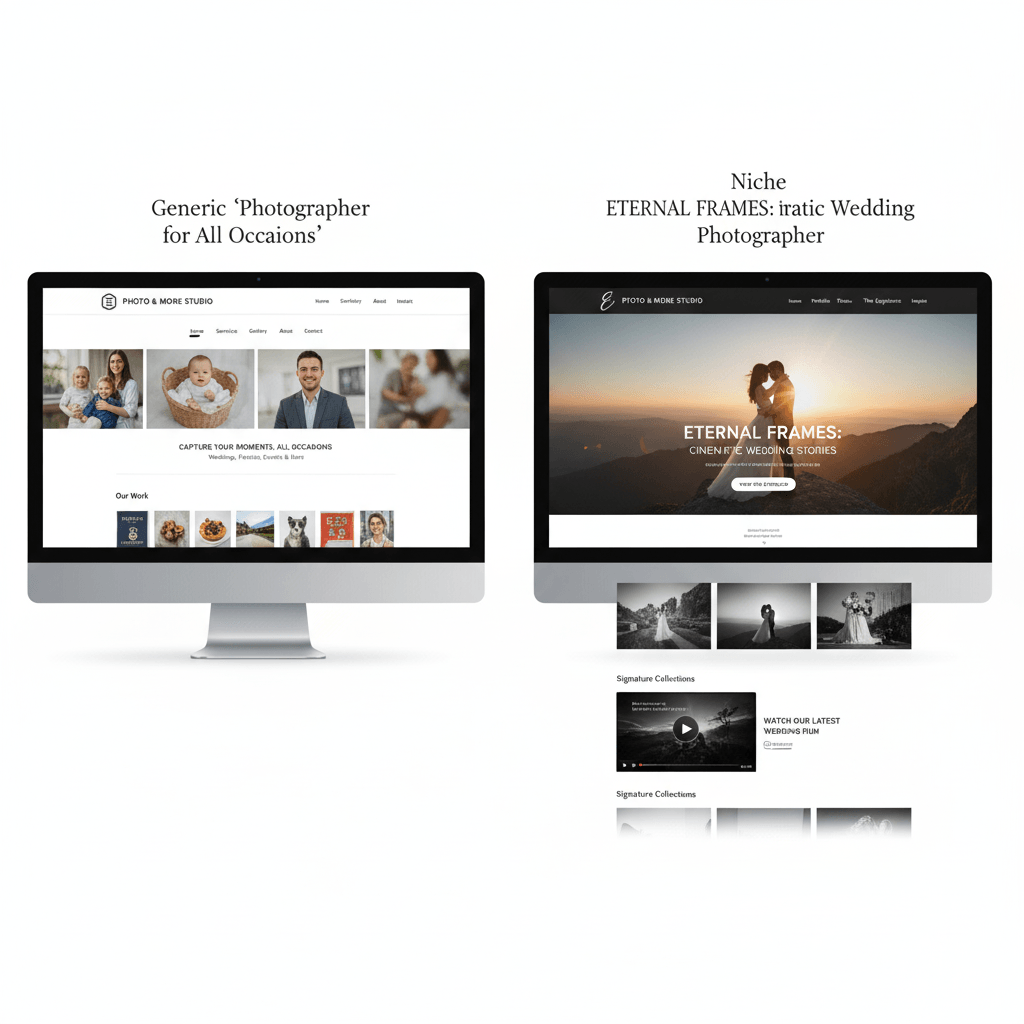
Step 1: Position Yourself as a Specialist, Not a Commodity
Generic photographers compete on price. Specialists compete on expertise.
If your website or portfolio says you do “weddings, portraits, events, and products,”
You’re telling potential clients: I do everything—please compare me to everyone.
That’s a race to the bottom.
Instead, niche down. Define your market and own it.
- If you specialize in intimate weddings, showcase that niche everywhere on your homepage, Instagram bio, and even your email signature.
- If you’re known for cinematic portraits, emphasize that your focus is on creating magazine-quality imagery.
By narrowing your focus, you send a powerful message: I’m the best at this specific thing. And people happily pay more for experts than generalists.
Example tagline transformation:
- Weak: Professional Photographer for All Occasions.
- Strong: Cinematic Wedding Photographer for Couples Who Want Timeless, Story-Driven Images.
That simple shift elevates your perceived value before the conversation even begins.
Step 2: Make Your Value Tangible (and Visual)
Clients can’t measure quality unless you show them.
Use every part of your brand to communicate value:
- Before-and-after edits: Show raw vs. final photos to highlight your skill.
- Behind-the-scenes content: Share how much preparation, lighting, and editing go into a single image.
- Testimonials and reviews: Highlight stories where clients mention reliability, experience, or how you exceeded expectations.
- Case studies: Create mini photo essays that show your process—from consultation to final delivery.
This kind of content doesn’t just market your service. It educates your audience. And education turns browsers into believers.
Step 3: Communicate Your Process Early
Most price objections come from confusion. When clients don’t understand what’s included in your rate, they fill in the blanks and assume it’s just the cost of taking pictures.
You can eliminate that misunderstanding by clearly explaining your workflow.
Example:
My process includes consultation, shoot planning, location scouting, professional editing, and backup delivery. I want to make sure every part of your experience feels effortless and consistent.
When clients hear that level of detail, they subconsciously think, Ah, this person is organized and professional. No wonder they charge more.
A clear process increases perceived value and builds trust.
Step 4: Add Social Proof and Authority Markers
People trust photographers who are trusted by others.
If you’ve been featured in blogs, shot for a well-known client, or received awards—mention it. These credibility cues instantly set you apart.
Also, sprinkle subtle authority markers throughout your digital presence:
- Trusted by 100+ couples since 2015.
- Published in [Local Magazine Name].
- Preferred vendor at [Venue Name].
You don’t need to brag—just state facts. Authority works best when it feels natural.
Step 5: Use Pricing Psychology to Your Advantage
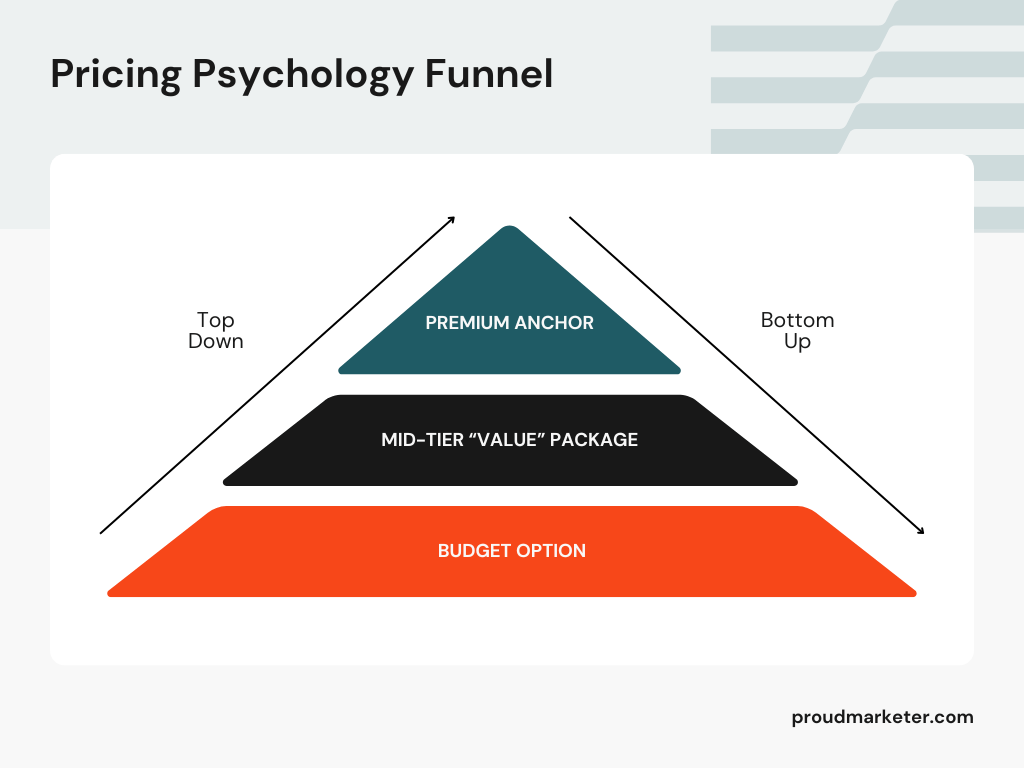
If you want to stop competing on price, you need to design how clients see your prices.
Three pricing psychology tactics that work:
- Anchor your value: Present your highest-value package first. This makes your mid-tier option feel more affordable by comparison. Example: If your premium package is $3,000, your $1,800 package suddenly feels like a “deal.”
- Bundle strategically: Combine deliverables into packages that make comparisons difficult. Instead of pricing per photo or per hour, sell complete experiences.
- Highlight savings ethically: If a client books early or combines services (like engagement + wedding), show the bundled savings. You’re rewarding commitment, not discounting desperation.
Step 6: Filter Your Leads Early
Our golden rule for conversions applies here too: qualify leads before you pitch.
You can do this by designing your contact form and inquiry process to filter serious clients.
Ask questions like:
- What inspired you to reach out about my work?
- What style of photography are you drawn to?
- What’s your expected budget range?
These questions do two things:
- They make clients reflect on their values and expectations.
- They reveal whether they’re a good fit for your services.
If someone lists a budget that’s way below your minimum, you can respond with resources, referrals, or a clear explanation—without wasting time on endless back-and-forths.
This not only saves time but keeps your energy focused on clients who appreciate your value.
Step 7: Create Content That Educates Clients About Value
Content marketing isn’t just for tech companies. It’s powerful for photographers, too.
Write blog posts or short guides that help clients understand what goes into great photography:
- Why Professional Editing Takes 10+ Hours Per Shoot
- 5 Hidden Costs of Cheap Photography (and How to Avoid Them)
- Behind the Scenes: What Really Happens on a Wedding Day Shoot
When potential clients read your educational content, you become their trusted advisor—not just another photographer. And when they trust you, they stop questioning your price.
You can also repurpose this content on Instagram captions, email newsletters, or YouTube videos. Each piece of content builds awareness, authority, and inbound leads who already value your expertise.
Step 8: Leverage Client Stories to Reinforce Your Premium Brand
Your past clients are your best marketing assets. Collect testimonials that go beyond great photos and highlight transformation.
Example testimonial structure:
We originally considered going with a cheaper photographer, but after seeing [Your Name]’s portfolio and hearing their vision, we decided to invest more and we’re so glad we did. The experience was effortless, and the photos were beyond our expectations.
These testimonials directly address the price objection before it happens. When new leads read them, they subconsciously conclude: People who choose quality are happier.
That’s persuasion through storytelling, not salesmanship.
Step 9: Maintain a Consistent Brand Experience
Your brand isn’t just your logo. It’s every touchpoint a client experiences: your website, emails, proposals, social media tone, and even how you deliver photos.
A consistent brand tells clients: This photographer is reliable and professional.
Inconsistency, on the other hand, erodes trust. If your Instagram looks premium but your proposal template looks amateur, clients notice. That mismatch creates doubt and doubt makes price a deciding factor.
Invest time in:
- Cohesive design and messaging.
- Streamlined onboarding documents.
- Elegant delivery systems for galleries and invoices.
Every detail reinforces your perceived value.
Step 10: Play the Long Game
Reputation compounds.
Every shoot you deliver, every testimonial you earn, every blog you write it all builds authority. Over time, referrals become your best source of leads. And referred clients rarely say, We found someone cheaper. They come to you already trusting your brand.
So don’t chase every sale. Focus on delivering premium experiences that build long-term equity. The clients who value you will stay and they’ll bring their friends.
In the final section, we’ll look at common mistakes photographers make when facing price objections and how to fix them fast.
Common Mistakes Photographers Make When Facing the “Cheaper Option” Objection (And How to Fix Them)
Even the most experienced photographers sometimes stumble when a client mentions they’ve found someone cheaper.
The good news? Most of these mistakes are completely avoidable with the right mindset and strategy.
Let’s break down the most common pitfalls and how to fix each one like a pro.
Mistake #1: Getting Defensive or Emotional
Hearing “we found someone cheaper” can sting. Especially if you’ve poured your heart into your work.
But reacting emotionally or defensively (Then go with them! or You get what you pay for!) can instantly damage your brand reputation.
Fix: Stay calm, confident, and kind.
Instead of taking it personally, use empathy and curiosity. Respond with something like:
I completely understand! There are a lot of photographers out there. May I ask what’s most important to you—price, style, or experience? That’ll help me see if I can recommend the best solution for you.
This response does three things:
- Keeps the conversation positive.
- Positions you as a helpful expert.
- Opens the door for you to reframe value.
Mistake #2: Competing on Price
When photographers try to match or undercut competitors’ prices, they start an unsustainable race to the bottom.
Lowering your price doesn’t attract better clients. It attracts bargain hunters who’ll leave for the next discount.
Fix: Compete on value, not price.
If the client is budget-conscious, focus on what makes your experience worth it:
- I take on fewer clients to ensure each session gets 100% of my creative attention.
- All packages include professional editing and lifetime backup.
These details subtly remind the client that you’re offering more than a cheaper photographer ever could.
Mistake #3: Talking Too Much, Listening Too Little
Many photographers try to justify their prices by overexplaining. But when you talk more than you listen, you miss valuable cues about what the client actually values.
Fix: Practice active listening.
Ask questions like:
- What made you start comparing quotes?
- What kind of experience are you hoping for on your shoot day?
When clients feel heard, they’re far more open to your perspective. You shift from being a vendor to being a trusted consultant.
Mistake #4: Failing to Follow Up
Too many photographers treat a client’s “We found someone cheaper” message as the end of the conversation.
But often, cheaper options fall through or clients realize too late they value quality more than they thought.
Fix: Follow up strategically.
Send a polite, professional follow-up like this:
Hey [Name], I hope your search for a photographer is going well! Just wanted to say thank you again for considering me. If your plans change or you need help with editing or future shoots, I’d be happy to help.
This soft touch often reopens doors later. Clients remember professionalism and many come back when they realize your value.
Mistake #5: Not Having a Strong Brand Narrative
When your brand lacks clarity, clients have no reason to choose you over a cheaper competitor.
Great photos isn’t a differentiator. It’s the bare minimum.
Fix: Build a brand narrative that communicates why you do what you do.
Your story sells you more than your prices ever could. Maybe you’re passionate about helping couples relive emotional moments. Maybe you document real, unscripted joy. Maybe you’re driven by storytelling.
Share that narrative in your About page, captions, and email signatures. When clients connect with your purpose, they stop comparing you by price.
Mistake #6: Lacking a Clear Offer Structure
If your packages or pricing options are confusing, clients default to comparing on cost.
Fix: Simplify your packages.
Each package should:
- Solve a clear problem.
- Have a simple, descriptive name (e.g., Essential Story, Complete Experience).
- Emphasize benefits, not features.
For example, instead of listing “10 edited photos,” write:
A storytelling session that captures your genuine connection- delivered as 10 fully retouched portraits.
Clarity reduces objections. Simplicity sells.
Mistake #7: Ignoring the Emotional Side of the Purchase
Photography isn’t a rational purchase. It’s emotional.
Clients aren’t just buying pictures; they’re buying how those pictures make them feel.
Fix: Sell the outcome, not the service.
Instead of emphasizing gear, lighting, or editing, highlight emotional results:
- These photos will help you relive your wedding day, moment by moment.
- You’ll have portraits your children will treasure for decades.
Price-sensitive clients start realizing they’re not comparing products. They’re comparing memories.
The Proud Marketer-Style Takeaway: Turn Objections into Opportunities
In Proudmarketer’s playbook, every objection is data. If multiple clients tell you they found cheaper photographers
It’s not a rejection. It’s market feedback. Use it to optimize your messaging, refine your offers, and strengthen your authority.
Here’s how to turn these objections into your competitive advantage:
- Create content around objections. Turn common client concerns into blog posts, videos, or FAQs. Example: Why Our Packages Cost More (and Why Our Clients Say It’s Worth It).
- Gather conversion data. Track how clients who question price eventually decide (or don’t). Identify what closes them.
- Build an FAQ-driven sales page. Address pricing objections right on your website with clarity and confidence.
When you do this consistently, you build what Proudmarketer calls authority-driven trust.
You become the educator in your niche—not just another service provider.
Bonus Section: Scripts You Can Copy and Paste
Here are three Proudmarketer style scripts you can adapt for your next price conversation.
1. The Empathetic Response:
I completely understand—budget’s always a factor. I might not be the cheapest, but I focus on delivering images you’ll be proud of for decades. My clients say the peace of mind and experience were worth it.
2. The Value Reframe:
I know there are cheaper photographers out there. But what my clients often tell me is that working with me isn’t just about photos—it’s about a stress-free experience from planning to delivery.
3. The Confidence Close:
If you’re looking for the absolute cheapest option, I might not be the best fit. But if you want photos that truly tell your story and last a lifetime, I’d love to make that happen for you.
Final Thoughts: The Photographer’s Advantage That No One Can Undercut
Price shoppers will always exist. But the photographers who build strong brands, communicate their process, and consistently deliver quality will always win.
Because here’s the truth:
- The cheapest photographers compete on price.
- The best photographers compete on trust.
Your work, your professionalism, and your client experience are your moat.
When clients truly understand the value you bring. They’ll stop asking for discounts and start asking for your availability.
And that’s when you know you’ve leveled up from freelancer to authority.
Next Step: Turn this strategy into action. Pick one section like updating your inquiry form or rewriting your service page and implement it today. Small steps compound, and before long, you’ll never hear “we found someone cheaper” again.
Frequently Asked Questions (FAQs)
- What should I say when a client brings up a cheaper quote?
Ask clarifying questions about what the competitor includes; emphasize your unique value; offer a scaled-option rather than simply discounting.
- Should I ever lower my price when a client mentions a cheaper photographer?
Yes, but only if you reduce deliverables or change scope don’t simply accept a lower rate without adjusting what you offer.
- How can I avoid being compared to cheaper photographers in the future?
Publish starting rates, communicate your value and process, structure your packages clearly, and educate prospects about what they’re paying for.
- Is being cheaper always bad?
Not necessarily. But if you compete purely on price, you’ll often attract clients who care less about value, which can impact your experience and profitability.
- How do I respond when a client says they found a cheaper photographer?
Ask what the cheaper quote covers (hours, edits, usage rights), then clearly outline the full‑service value you offer your experience, scope, deliverables—without simply lowering your price.
- How can I handle budget‑conscious clients in photography without compromising my value?
Find out their budget early, present tiered packages with defined deliverables, explain what professional photography involves, and if needed offer a scaled‑back version- not just a discount.
- Why do some clients choose cheaper photographers over value‑based service?
Because they often lack awareness of the value difference (e.g., experience, edits, rights) or see photography as just a cost instead of an investment in quality and results.
- What is value‑based photography pricing vs competing with a cheaper photographer?
Value‑based pricing focuses on the experience, outcome and your expertise rather than just hours or gear. Competing solely on price risks undervaluing yourself. Your goal is to position based on what the higher investment delivers.


